CYNY CAD
2017-2026

How We Got Started
2017
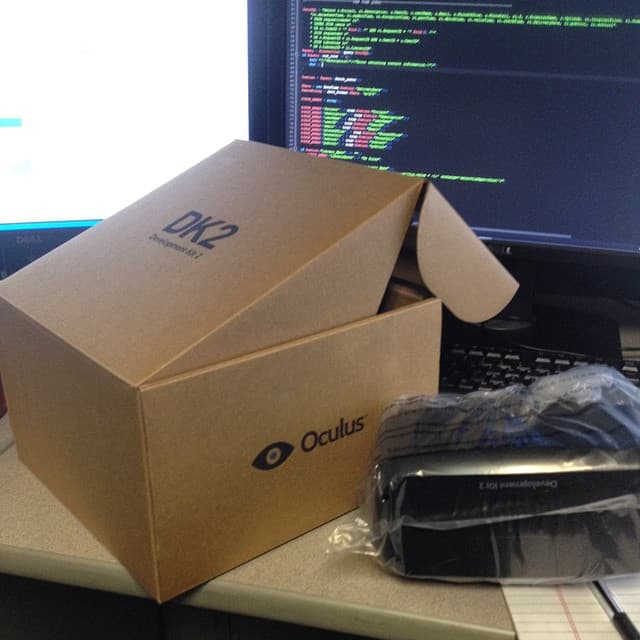
Today, in 2026, the two letters that dominate nearly every conversation about technology are AI. Back in 2017, however, a different pair had taken the tech world by storm: VR.
At the time, Nick was running Optimum Design Associates (ODA), the PCB design and assembly company he had co-founded nearly two decades earlier. I had joined in 2013 as a software engineer and, over the next few years, grown into managing the systems and team behind its component library operations. My role at ODA gave me the opportunity to work with nearly every major enterprise PCB design platform, including Altium, Mentor Graphics Xpedition, Cadence Allegro, and PADS. I moved between departments and projects, building a web-based product lifecycle management system for the component library team, creating a custom CRM for board design projects, developing ECAD components and automation tools, and even completing a few smaller board designs myself.
Altogether, that work gave me a strong understanding of the PCB design process from beginning to end. I had seen how engineers selected components, created schematics, placed parts, routed boards, managed libraries, reviewed designs, and prepared files for manufacturing. I had seen how powerful the existing tools could be, as well as how complex and unintuitive they often felt. In my personal time, I had also developed an interest in virtual reality. I was just returning to Oakland from a sabbatical summer in Dallas, where I had begun developing my first VR game on a newly acquired Oculus Rift Developer Kit 2.
Against that backdrop, Nick approached me with a question:
"What if we made our own PCB design tool in VR?"
It was an ambitious idea, and at the time, it did not seem entirely unreasonable. VR promised a new way to interact with complex spatial information, and PCB design was fundamentally a spatial problem. Instead of manipulating a board through a flat monitor, a mouse, and layers of menus, what if an engineer could step inside the design, move components with their hands, inspect connections in three dimensions, and collaborate with other engineers in the same virtual workspace?
That question became the starting point for CYNY CAD.
Early Development
2018
Nick and I agreed that CYNY would remain separate from ODA. It was a nights-and-weekends project, which meant our ambitions were much larger than the time and resources available to us.
I quickly learned that building a game and building a PCB design tool were very different challenges. A game engine is built around assets, animations, menus, levels, controls, and gameplay logic. Those systems are well suited to environments where most of the content is created in advance. A PCB design tool, however, has to generate and manipulate content dynamically. The board, components, traces, layers, and geometry are different for every design.
How do you render an arbitrary circuit board inside a game engine? How do you represent thousands of components and connections at different scales while maintaining the performance required for VR?
We chose Unreal Engine 4, partly because I wanted to deepen my understanding of C++, and partly because having access to the engine's source code gave us the flexibility to modify systems that had never been designed for electronic design automation.
There were technical hurdles everywhere, and it is fun to look back at screenshots and recordings from those early experiments. A complete PCB design platform has to account for schematic symbols, schematics, board layers, material stackups, component footprints, three-dimensional component models, board outlines, placement constraints, drill sizes, component layout, routing, design rules, and manufacturing outputs. Each of those areas could represent a major software project on its own.
Trying to solve all of them at once would have been impossible, so we started with something more focused: a board visualization tool.
Fortunately, Oculus had recently released the design files for the Rift DK2 as open-source hardware, giving us a complex, recognizable board to use as our first test case. Even with the scope reduced to visualization, rendering the board convincingly in VR was no small task.
We had to extend Unreal's dynamic material system so that it could render scalable vector graphics for each board layer in real time. We also implemented our own approach to foveated rendering, weighted by distance, so that users could view an entire board at scale while still inspecting dense areas up close without overwhelming the hardware.
All of this came in addition to the more familiar work of building the virtual environment, creating assets and component models, designing controls, and determining how a user should move through and interact with the board.
The early version of CYNY was still far from a complete design tool, but for the first time, we could load a real circuit board into VR, walk around it, inspect its layers, and begin to understand what this new interface might make possible.
The Epic MegaGrant
2019-2020
As I mentioned earlier, CYNY began as a nights-and-weekends project. It was completely unfunded and developed almost entirely in my spare time.
By late 2019, I was looking for a way to accelerate development. Epic Games had launched its MegaGrants program, offering no-strings-attached funding to projects built with Unreal Engine. We put together an application showcasing the latest version of our PCB visualization tool, submitted it, and waited.
In February 2020, we received the news that CYNY had been awarded a $60,000 Epic MegaGrant.
For a small, self-funded project, it was an enormous vote of confidence. Until then, CYNY had been little more than an ambitious experiment pursued after work and on weekends. The grant made the project feel real. It gave us the opportunity to bring in outside help, expand the scope of development, and begin thinking about CYNY as something that might eventually become a viable product.
I will always be grateful to Epic Games, not only for making Unreal Engine available as such a powerful and accessible development platform, but also for supporting an unconventional project at a moment when that support mattered deeply.
Navigating COVID
2020

The grant arrived at an unusually uncertain moment.
We received the award in February 2020, during the early stages of what would soon become the COVID-19 pandemic. Within weeks, the Grand Princess cruise ship docked in Oakland, and California issued its statewide stay-at-home order.
Like everyone else, we had no idea what the following months would bring. The grant offered a small sense of stability and direction at a time when the future felt uncertain in nearly every respect. It gave me something concrete to focus on and a reason to continue moving forward.
COVID also brought major changes to my personal life. After nearly a decade in Oakland, I returned to my home state of New Mexico. I hoped that having more space would provide some relief from the confines of my small Oakland apartment while also lowering my expenses and giving me a more grounded environment in which to continue development.
Sixty thousand dollars is a meaningful amount of money, particularly for a side project. It is also not enough to build a complete electronic design automation platform. At that point, I was still the only person who had written any code for CYNY, so we decided to use most of the grant to hire a contractor who could help us expand the application.
That decision forced us to answer a much larger question: what exactly were we building?
Scope Creep
2021
Until then, CYNY had primarily been a VR board visualization tool. With the grant, we began thinking beyond visualization and toward a complete PCB design platform.
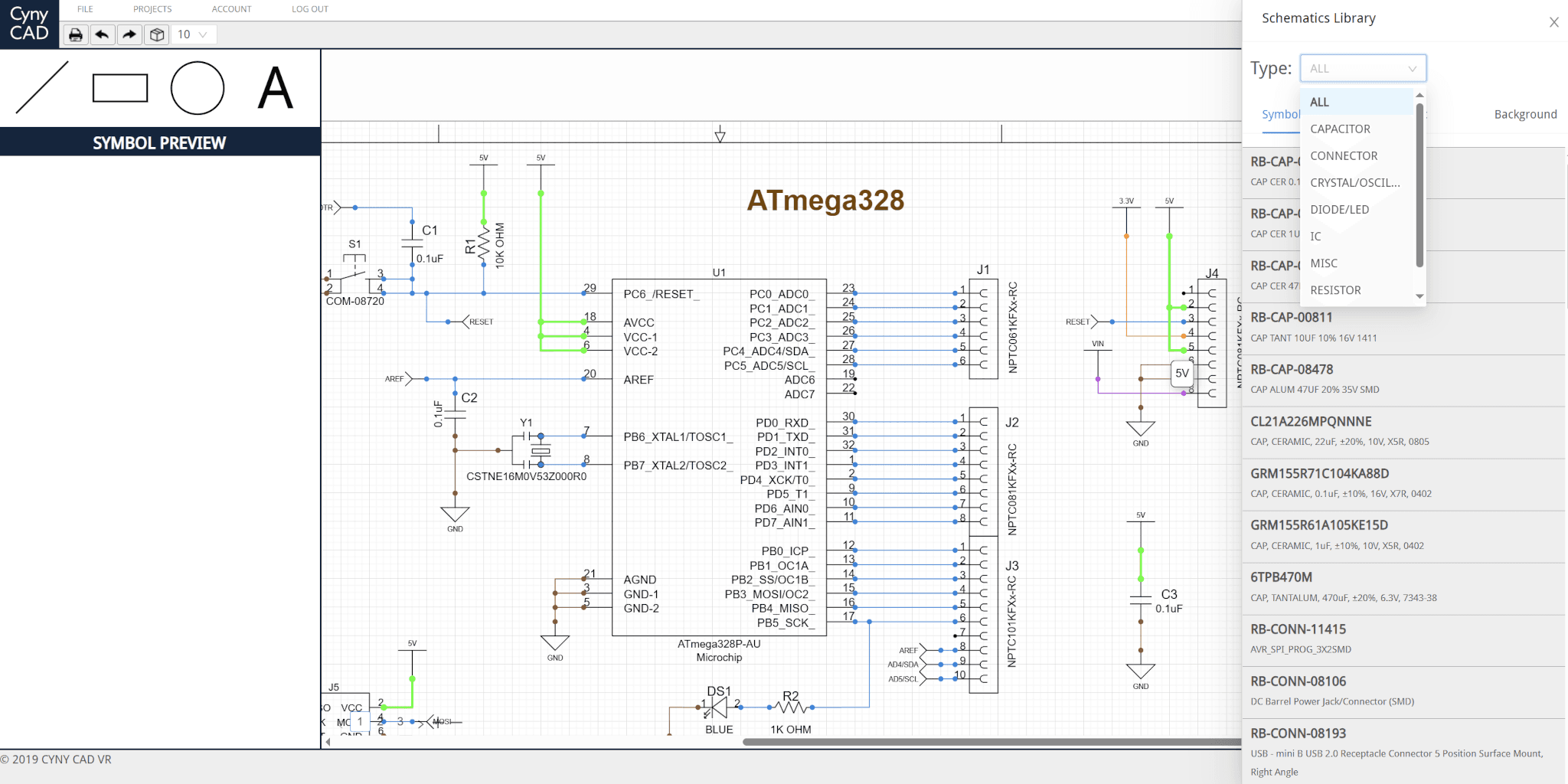
I argued that we should begin with schematic capture because that was where the design process itself began. This represented a significant departure from the Unreal Engine application. Rather than building the schematic editor inside the game engine, we decided to create it as a web-based SaaS application using React.
That decision expanded the pool of developers we could hire, and I eventually found a talented developer named Taras in Lviv, Ukraine, to help build the schematic tool.
It also exposed one of the central difficulties of developing specialized engineering software. Finding a capable web developer was one thing. Finding someone who also understood electronic design, schematic symbols, connectivity, component libraries, and the logic behind circuit diagrams was much harder, especially on a limited budget.
This was not the same as building a conventional website or photo-sharing application. A developer needed to understand not only how to render symbols and connect lines, but also what those symbols represented, why the connections mattered, and how the resulting data would eventually flow into the PCB layout process.
To bridge that knowledge gap, I created highly detailed design documents explaining how almost every part of the application should behave. Taras did an excellent job translating those requirements into a basic but functional schematic editor, but the process required a significant amount of time and oversight.
Looking back, I believe this was our first major product-development mistake.
Rather than building a schematic editor from scratch, we should have integrated with an existing tool and focused on import, translation, visualization, and interoperability. That approach would have allowed us to build on mature software while concentrating our limited resources on the features that made CYNY unique.
We chose not to take that route because our ambitions had grown. We imagined CYNY as a self-contained ecosystem encompassing schematic capture, PCB layout, component libraries, and eventually on-demand ECAD model creation.
The goal was to guarantee consistency and reliability across the entire platform. From my experience in the PCB design industry, I knew that inconsistent libraries and poorly managed inputs could create serious problems. Symbols, footprints, pin mappings, and three-dimensional models often varied in quality and format. A controlled ecosystem promised cleaner data and a more dependable design process.
In theory, that was a compelling vision. In practice, it meant that we were attempting to solve several enormous problems at the same time.
Over roughly the next year, Taras delivered a functional early version of the schematic tool before the MegaGrant funding was exhausted. One of our colleagues taught a printed circuit board design course at Oregon Tech, which gave us a practical setting in which to test how CYNY might be used for instruction. We recreated the SparkFun RedBoard as a demonstration project, including its full schematic and board design, so students could explore a familiar, real-world circuit inside the platform. The goal was not only to showcase CYNY's capabilities, but also to see whether a more visual and interactive tool could make PCB design easier to teach and understand.
At the same time, I continued developing the original Unreal Engine application. What had started as a visualization tool gradually became a layout and routing tool. We were no longer simply displaying circuit boards in VR. We were attempting to build both sides of a complete PCB design platform, across two different technology stacks, with a very small team and a rapidly diminishing budget.
CYNY was becoming more capable, but its scope was growing much faster than our ability to sustain it.
What is the Product?
2022
By 2022, we were still confronting questions that should probably have been answered much earlier: What exactly was the product? What problem were we solving? Who was the customer?
We had partial answers to each.
CYNY was intended to be an alternative to the existing PCB design tools. The problem, as we saw it, was that many of those tools were unintuitive, visually dated, and poorly suited to the inherently spatial nature of circuit board design. Nick and I knew the available options well, and some of them appeared to have made remarkably little progress in their interfaces or workflows since the early 2000s. At times, using them felt like opening a program designed for Windows 95.
Our assumption was that PCB design could benefit from the interaction models used in modern three-dimensional design software. Placement, layout, inspection, and design review all seemed like natural candidates for a more visual and spatial interface.
The market, however, was less clear.
Our initial idea was to target students, educators, and electronics enthusiasts. We discussed offering CYNY free to colleges that incorporated it into their coursework, with the hope that students would learn the platform and continue using it as they entered the workforce.
It was a reasonable entry strategy, but it did not fully resolve the larger product question.
The more we developed CYNY, the more apparent it became that only certain parts of PCB design translated well to a game engine. Component placement, board layout, and design review made sense in an interactive three-dimensional environment. Routing could also work, if one was willing to accept some compromises. Many other parts of the process were still better suited to a conventional desktop or web interface.
That realization forced us to divide the product across multiple technology stacks. Placement, layout, and routing remained in Unreal Engine, while schematic capture, project management, libraries, and other supporting tools were developed as part of a web-based SaaS platform.
Instead of simplifying the PCB design process, we were creating a product that had to coordinate two separate applications, development environments, and user experiences.
There was also the question of intellectual property. A company's schematics and board designs often represent some of its most valuable and sensitive information. Many enterprise customers were understandably reluctant to upload that material to an external cloud platform.
We could offer locally hosted or on-premises deployments, but that introduced another layer of complexity. Every additional deployment option meant more infrastructure, security requirements, configuration, maintenance, and customer support.
Meanwhile, the competitive landscape was changing. Altium, in particular, was making significant strides in cloud collaboration, interface design, and product integration. Some of the weaknesses we had identified in the existing market were beginning to receive serious attention from much larger and better-funded companies.
CYNY was also drifting further from its original identity. It had begun as a VR design and visualization tool, but by this point, VR was no longer central to the product. We modified the Unreal Engine application so that its layout tools could also be used on a conventional desktop, and I began considering whether placement, layout, and routing should eventually move to the web as well.
That raised an uncomfortable question: if the product no longer depended on VR, and if much of the workflow belonged in a traditional interface, what made CYNY fundamentally different from the tools we were trying to replace?
During this period, I left my full-time role at ODA to focus more seriously on CYNY. Even then, it was never my sole focus. I continued taking on a steady amount of contract work to pay the bills, which meant development still had to compete with the immediate demands of earning a living.
We had built increasingly capable technology, but we had not yet found a clear product around it. CYNY was becoming broader, more complex, and more difficult to explain at precisely the moment when it needed a sharper identity.
The VR Market and a New Direction
2023
By 2023, it was becoming harder to believe that VR was still on a straightforward path toward becoming the next major computing platform. When we started CYNY, companies like Oculus, Microsoft, and Magic Leap made it feel as though spatial computing was just around the corner. By this point, the picture was much less clear.
Microsoft had gradually narrowed HoloLens toward specialized enterprise uses before ending production of HoloLens 2 without announcing a successor. Magic Leap followed a similar path, retreating from its original consumer ambitions and repositioning itself around enterprise hardware, optics, and licensing. Even Apple, with all of its design expertise and market power, struggled to turn the Vision Pro into a mainstream product. The hardware was remarkable, but its price and limited audience offered another reminder that technical achievement did not necessarily translate into widespread adoption.
The consumer market had also moved in a direction that did not particularly favor CYNY. Oculus, now Meta, had shifted away from PC-based VR and placed its future behind the standalone Quest headsets. That decision made VR more accessible, but it also moved the market toward mobile hardware, games, fitness, and lightweight entertainment rather than demanding professional applications.
Meta continued to invest heavily in Horizon Worlds, but it never seemed to gain the kind of traction that would make the metaverse feel inevitable. Valve and SteamVR kept PC VR alive for a committed group of enthusiasts, but it was increasingly clear that this was a niche rather than a mass market. VR had not disappeared, but it no longer felt like the rising tide that would naturally carry a product like CYNY with it.
Three considerations shaped our next move: the need to create a revenue-generating product, the difficulty of sourcing reliable ECAD models for CYNY, and the uncertain future of VR adoption.
ECAD models are the foundation of any board design. A schematic symbol, PCB footprint, and 3D model must accurately represent the underlying component. If that data is incomplete or incorrect, everything built on top of it is compromised. Garbage in, garbage out.
Despite their importance, ECAD models are often among the least appreciated parts of the design process. They require significant time and specialized knowledge to create, review, and maintain. For CYNY, the problem was even greater because our walled-garden approach depended on a consistent and reliable component library. We could not build a dependable design platform without first solving the library problem.
Once again, I had to think creatively about what we could accomplish with a limited budget. I began looking toward Kenya, a country with a large, educated, technology-oriented, and relatively young workforce. My initial idea was to build an ECAD library team there that could create symbols, footprints, and 3D models at a lower cost than would have been possible in the United States.
After several iterations, however, I realized that I did not necessarily need a team to create the models themselves. What I needed was a team that could find the correct technical documents, extract the relevant information, and annotate that data in a structured and consistent way. With sufficiently detailed annotations, much of the symbol, footprint, and 3D model creation process could eventually be automated.
That realization changed the opportunity considerably. The resulting ECAD models could be valuable, but so could the annotated datasheets and the aggregated component data behind them. I began to imagine customers beyond CYNY itself, including companies like ODA, established ECAD platforms such as Altium, and component intelligence providers such as SiliconExpert.
CYNY was no longer simply trying to build a better PCB design application. We were beginning to focus on the data infrastructure that design tools depended on.
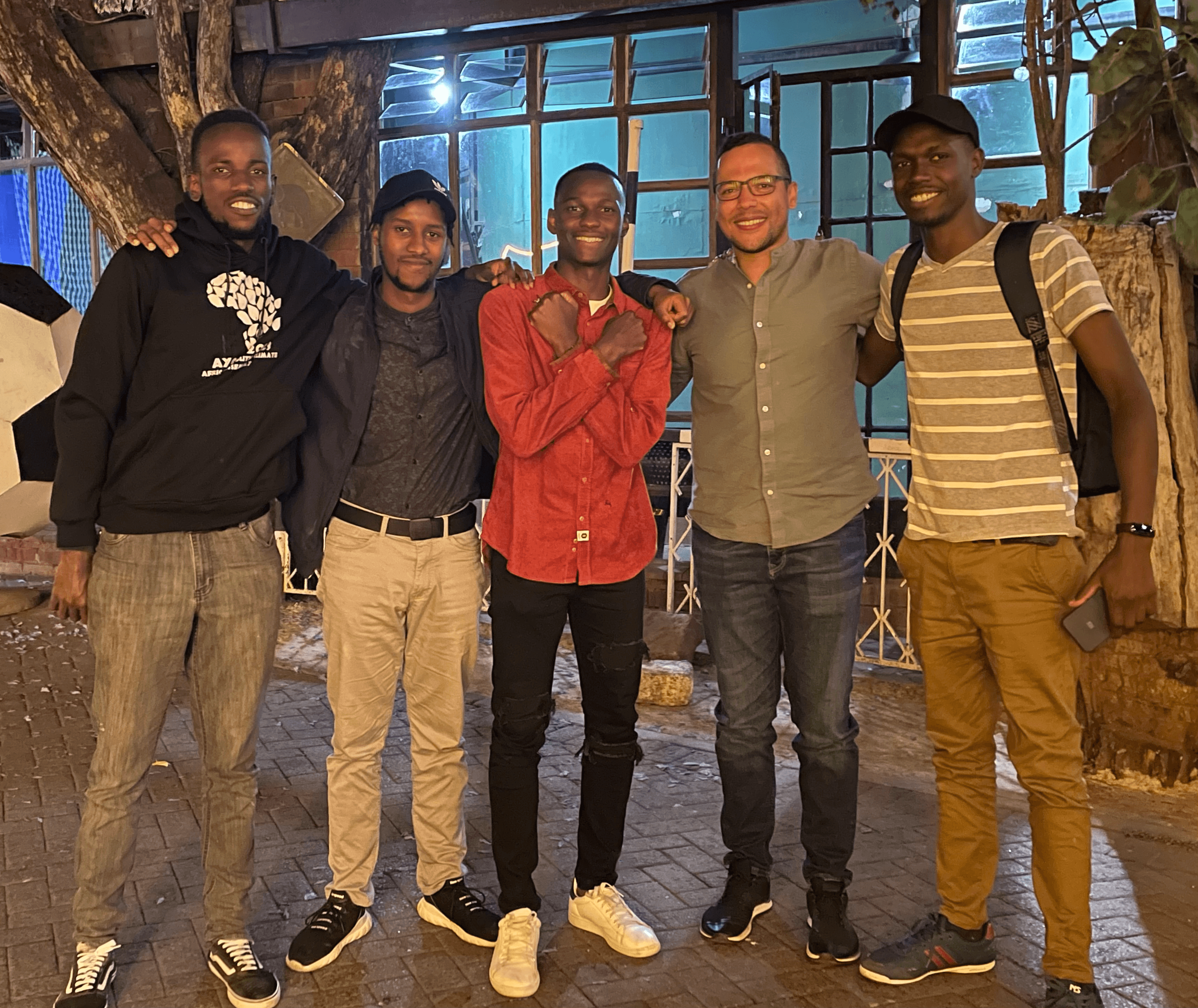
This represented a significant pivot toward a crowdsourced annotation platform. I traveled to Kenya to begin making contacts, testing the concept, and developing a small team that could help turn unstructured technical documents into reliable engineering data.
At the same time, Nick and ODA were going through a major transition of their own. After exploring a potential sale for several years, ODA was acquired in 2024 by a larger electronics manufacturing services provider. The sale freed up some capital that Nick was able to invest in CYNY.
It was still a modest budget for a project of this scale, but it was enough to keep us moving. More importantly, we finally had the beginnings of a focused product that could generate revenue independently, rather than relying on the uncertain future of VR or the success of an entire PCB design platform.
SpearCAD and the Rise of AI
2024-2026
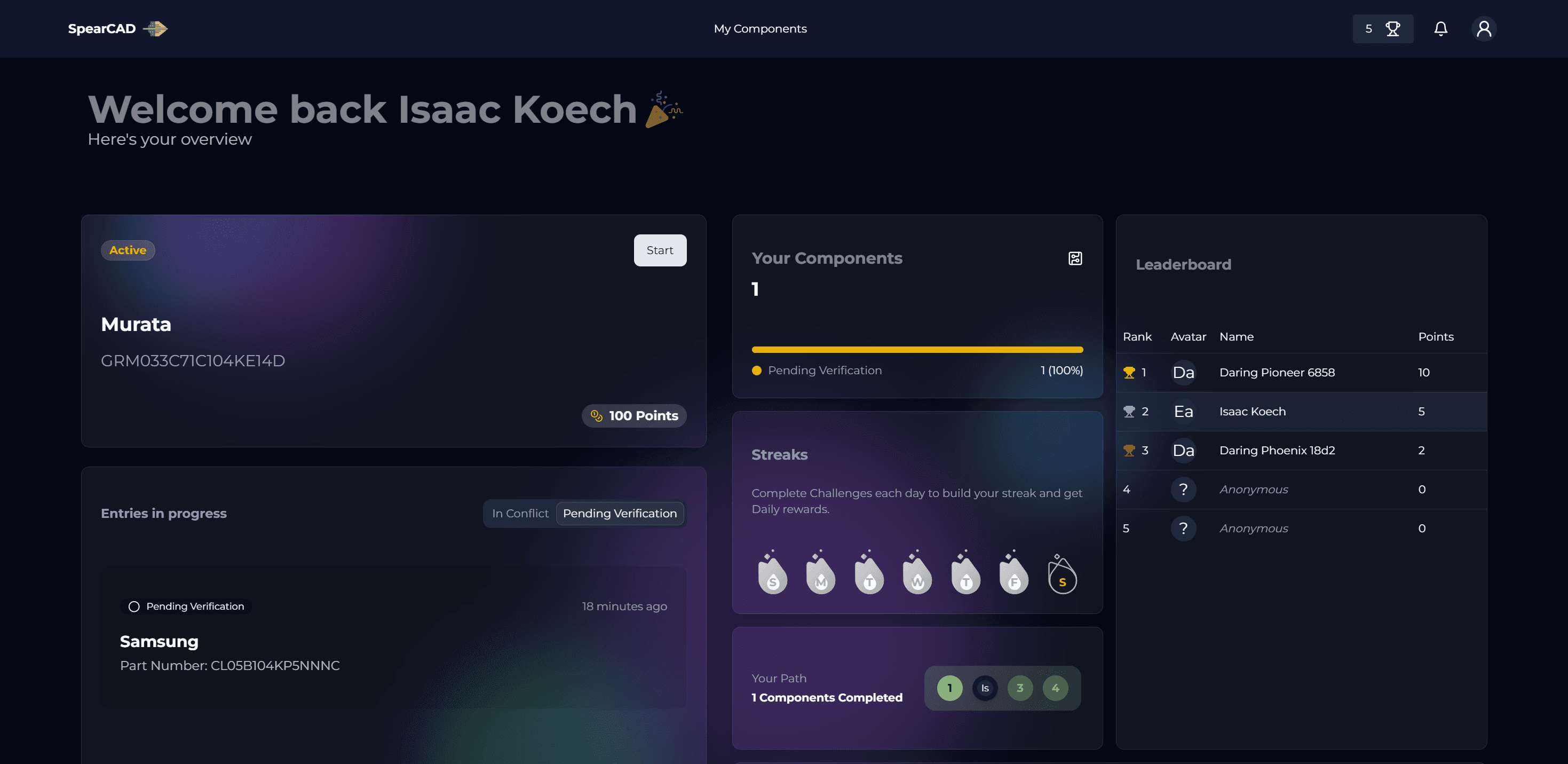
We called the crowdsourced annotation platform SpearCAD.
It included user management, browser-based PDF annotation, web-scraping extensions for aggregating component data, and gamified systems built around ranks, points, and challenges. The platform was developed with the help of a small team of University of Nairobi graduates and hardware enthusiasts I had met during my travels. Beyond the core development team, dozens of users participated in our annotation pool.
For the first time, it felt as though we had built the beginnings of an operational system rather than another prototype. Users could find datasheets, identify the relevant information, annotate technical documents, and contribute structured component data that could eventually support ECAD model generation.
At the same time, artificial intelligence was advancing faster than we could adapt.
I had begun using GPT-3.5 for coding assistance as early as 2023, but over the next several years, AI development accelerated dramatically. The SpearCAD team adopted Cursor and later Claude Code, allowing us to build more quickly with fewer resources. AI was not only changing how we developed the platform. It was also beginning to automate the work the platform had been designed around.
When we first conceived of SpearCAD, accurately extracting structured information from technical datasheets required human review and annotation. Multimodal AI models gradually made much of that work practical to automate. The remaining challenge was concentrated in the most visually complex parts of a datasheet, particularly charts, tables, package drawings, and engineering diagrams, where AI models continued to struggle with precision and spatial relationships.
We adjusted the product again. Rather than focusing solely on human annotation, we began preprocessing datasheets into structured data and metadata files. This could allow customers to query component information without repeatedly sending entire documents to an AI model, reducing token usage while improving consistency and retrieval speed.
It was a potentially valuable service, but the target was moving quickly. Every improvement in AI opened new possibilities while simultaneously reducing the value of work we had already completed. The boundaries between human annotation, automated extraction, document search, and ECAD model generation were changing faster than a small team could define and commercialize a stable product.
Meanwhile, development of CYNY's layout and routing application continued, but increasingly in the background. The original product had become one project among several, competing for time and resources with SpearCAD, the data pipeline, automation tools, and the ongoing search for a viable business model.
Our runway was also running out. Nick had asked me to turn the technology into a focused product that we could demonstrate, sell, and bring to market. Despite years of development and several promising directions, I was never able to distill everything we had built into a product with a sufficiently clear customer, value proposition, and path to revenue.
By late 2025, the writing was on the wall. In early 2026, we made the decision to end development of CYNY.
It was not the ending we had imagined when Nick first asked whether we could build a PCB design tool in VR. What began as a nights-and-weekends experiment had grown into a VR visualization platform, a schematic editor, a PCB layout and routing tool, a crowdsourced annotation system, and an AI-assisted component data pipeline.
We built a great deal, learned even more, and came surprisingly far. But in the end, we never found the single product that could hold all of those ideas together.
Looking Ahead
Development of CYNY CAD is being suspended.
The demo layout review tool will remain available on Steam, the Epic Games Store, and the Meta Store, along with several demonstration PCBs and schematics for people to explore. SpearCAD has also been suspended while we reassess where its technology and ideas may still have value.
Our quixotic endeavor began with a simple belief: PCB design tools could be more intuitive, more visual, and more enjoyable to use. We wanted to create something that would make a difficult technical process more approachable, help experienced designers work in new ways, and inspire more people to explore electronics design.
Nearly a decade later, the industry looks very different. VR did not become the universal computing platform many of us expected, while advances in artificial intelligence are beginning to reshape the design process itself. Tasks involving component research, schematic creation, placement, routing, review, and documentation are all becoming increasingly automated. The interface we imagined may not become commonplace because the role of the designer is changing along with the tools.
CYNY changed with that environment. It began as a VR board visualization experiment and grew into a schematic editor, a desktop layout and routing application, a crowdsourced annotation platform, and an AI-assisted engineering data pipeline. Along the way, I worked across graphics programming, game engines, web applications, cloud infrastructure, data extraction, machine learning, electronic design automation, and product development.
I also had the opportunity to build and lead distributed teams, translate specialized engineering concepts into detailed software requirements, manage contractors and limited budgets, work with users and educators, and carry a complex technical project from its earliest prototype through several major changes in direction.
Not every experiment became a product, but each one taught us something important. We learned which parts of PCB design benefited from three-dimensional interaction and which were better served by conventional interfaces. We learned how difficult it is to build reliable engineering libraries, how much value exists in structured technical data, and how quickly a product strategy must evolve when the underlying technology changes.
The most important lessons were not purely technical. Dedication needs direction. A compelling vision must be paired with a clearly defined customer, a specific problem, and a credible path to market. Small teams cannot pursue every promising direction at once, and the willingness to stop is sometimes as important as the determination to continue.
Choosing to suspend CYNY was difficult, but it was also the responsible decision. Continuing to invest in a product simply because of the time already spent would not honor the work. The better way to honor it is to carry its lessons, technology, and experience into the next challenge.
There will always be hackers, inventors, artists, and engineers who want to build things simply to discover what is possible. There will always be people who question established tools, rethink familiar processes, and pursue ideas before the market is ready for them.
It is in our nature to create.
So here is to the future builders. When you begin your own endeavor, I hope your vision is clear, your conviction is earned, and the work itself teaches you something worth carrying forward.
Co-Founder CYNY CAD
The CYNY CAD demo layout review tool remains available, complete with sample PCBs and schematics to explore.